
Electric Vehicle Accident Repair in Bracknell, Dorking and Redhill
Electric vehicles are not simply cars with a different power source. The high-voltage battery pack, the lightweight aluminium and composite structures, the advanced driver assistance systems, the over-the-air software that governs how every component interacts: all of it changes what a correct accident repair looks like.
Doing it correctly requires manufacturer authorisation, specific tooling and access to each brand’s own repair data.
That is exactly what Finesse has. At Finesse, we carry out manufacturer-approved electric vehicle accident repair at our centres in Bracknell, Dorking and Redhill. We hold approvals from Tesla, Audi, Volkswagen Group, Volvo and AION.
Our technicians are trained in high-voltage isolation procedures, EV-specific diagnostic scanning and the repair methods each manufacturer specifies for their vehicles. Every EV repair begins with a full pre-repair diagnostic scan. Every EV repair ends with a full post-repair scan and a calibration certificate.
Why EV accident repair requires a different approach
The differences between repairing an electric vehicle and a conventional vehicle affect every stage of the process.
It is not simply a matter of additional training or having the right tools. Manufacturer authorisation gives approved repairers access to brand-specific repair data, battery protection zone maps, high-voltage isolation procedures and calibration software that are not available to non-approved bodyshops. Without that access, a repairer is working from general knowledge rather than the exact specification your vehicle was built to.
For drivers, the consequence is straightforward. A repair that looks correct from the outside may not have addressed the battery management system, recalibrated the ADAS sensors or followed the structural bonding sequence the manufacturer requires.
At Finesse, every EV repair follows the procedures specified by the brand that built the vehicle. That is what manufacturer approval means in practice.
Repair stage
Conventional vehicle
Electric vehicle
Before work begins
Visual check for visible damage. Standard safety precautions.
High-voltage system isolation using manufacturer-specified procedures and PPE. Pre-repair EV diagnostic scan reading all DTCs (diagnostic trouble codes). Battery management system check.
Structural repair
Steel or aluminium bodywork corrected using approved methods.
Battery protection zones identified and respected throughout. Aluminium welding, riveting and structural bonding to OEM specification. Frame rack alignment with computerised measurement. Carbon fibre and composite repair where applicable.
Parts
OEM or approved equivalent parts sourced.
Genuine manufacturer EV parts only for battery-adjacent repairs. High-voltage cabling and connectors require brand-specific components. Sensor housings to manufacturer-specified tolerances.
Diagnostics
| Post-repair scan for fault codes. |
Pre-repair and post-repair EV diagnostic scan. Tesla Toolbox or manufacturer-equivalent software to read all DTCs and validate system functionality. Software validation where OTA updates may be affected by the repair.
ADAS recalibration
Required where sensors are in the repair area.
Same requirement, but EVs typically have more ADAS integration. Static or dynamic calibration to manufacturer specification. Calibration certificate provided on completion.
What happens when you bring your EV to Finesse
From the moment you contact us to the moment your keys are returned, here is the exact process your vehicle goes through.
- 1
High-voltage safety check and pre-repair scan
Before any physical work begins, our technicians carry out a high-voltage isolation procedure using manufacturer-specified tooling and PPE. A full pre-repair EV diagnostic scan then reads all diagnostic trouble codes across every system: battery management, ADAS, powertrain and body electronics. This establishes a baseline and identifies any hidden damage not visible from the outside.
- 2
Battery structure and protection zone assessment
The battery pack location and protection zones are identified on your specific vehicle using manufacturer repair data. No structural work begins near the battery until the protection zone assessment is complete and the correct approach is confirmed. Internal battery damage can develop without visible external signs. This step catches it before it becomes a post-repair problem.
- 3
Structural repair using manufacturer-approved methods
Structural repairs are carried out using the correct methods for your vehicle’s construction. For aluminium-intensive EVs this includes welding, riveting and OEM-specified structural bonding. For vehicles with composite or carbon fibre components, specialist bonding and repair techniques are applied. Frame alignment is verified using computerised measurement against manufacturer tolerances.
- 4
Bodywork, bumper repair and paint refinishing
Cosmetic and bodywork repairs are completed using manufacturer-approved paint systems and colour matching. For bumper repairs, sensor positioning is checked before and after the repair, with recalibration carried out where sensors have been disturbed. Paint is applied in a controlled environment using approved systems to match your vehicle’s original specification.
- 5
ADAS recalibration
Where the repair has affected sensor positioning, including bumper, windscreen, mirror or suspension work, ADAS recalibration is carried out to manufacturer specification. Static calibration is performed in our controlled workshop environment. Dynamic calibration is carried out on the road where the manufacturer’s procedure requires it. Your vehicle leaves with a calibration certificate.
- 6
Post-repair EV diagnostic scan and quality check
A final EV diagnostic scan reads all systems to confirm everything is operating within manufacturer specification. For Tesla vehicles, this includes Tesla Toolbox validation. For other brands, manufacturer-equivalent diagnostic software is used. A full visual quality check is completed before handover. You receive documentation of all work carried out, including the pre and post-repair scan reports and calibration certificate.
Electric vehicles we are manufacturer-approved to repair
Each approval is brand-specific and requires Finesse to follow that manufacturer’s EV repair procedures, use genuine parts and maintain the specialist equipment required. This is not a general EV capability claim. It is a formal, audited approval from each manufacturer.
Tesla accident repair in Surrey and Berkshire
Tesla is the most common EV on Surrey and Berkshire roads, and accident repair requires more than general EV training.
Tesla vehicles are built around an aluminium unibody chassis that requires specific techniques. The Autopilot and Full Self-Driving camera and radar systems must be recalibrated using Tesla Toolbox software after any repair affecting sensor mounting points.
The battery thermal management system, must be assessed where the repair is in proximity to the battery housing.
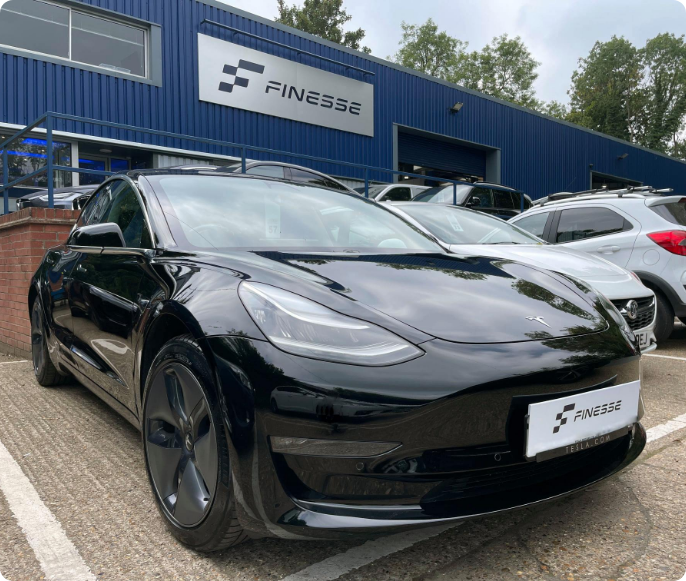
Finesse’s Bracknell centre is one of the UK’s leading Tesla-approved accident repair centres, serving Tesla owners across Surrey, Berkshire and Greater London. We are a proud partner of the Tesla Owners UK Club, the largest Tesla community in the country.
EV accident repair across Bracknell, Dorking and Redhill
If your insurer has directed you to a non-Tesla-approved bodyshop, you have the right to choose your own repairer. A Tesla repair carried out at a non-approved centre may not meet Tesla’s structural integrity or ADAS calibration standards, which can affect your warranty and the vehicle’s resale value
If your electric vehicle has been involved in an accident, our team is here to help.
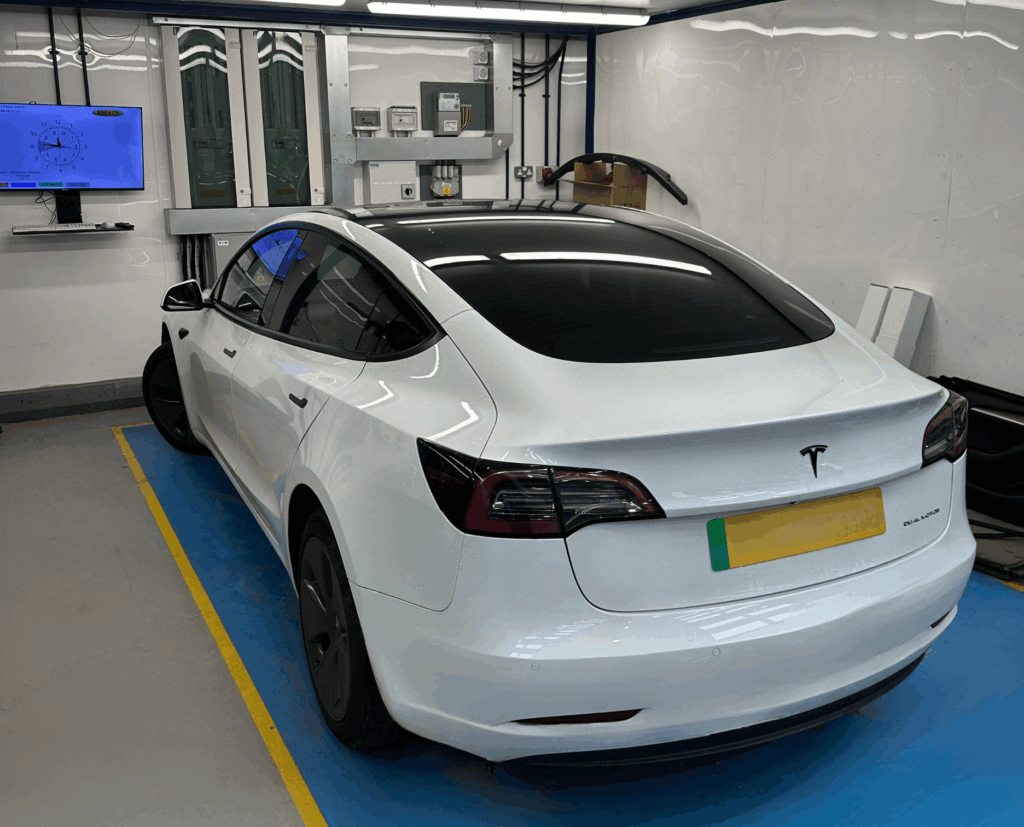
Finesse Accident Repair Centres
Approved accident repair centres for Audi, Cupra, Seat, Tesla, Volkswagen and Volvo.
Call us: Dorking 01306 743 030 / Bracknell 01344 203058

Electric Vehicle Accident Repair FAQs
Q: Can my electric vehicle be safely repaired after an accident?
A: Yes. When the repair is carried out by technicians with specific EV training using the correct manufacturer-approved procedures and equipment, an electric vehicle can be safely repaired after an accident. The critical requirement before any physical work begins is high-voltage isolation, a process that requires manufacturer-specific tooling and trained personnel. At Finesse, HV isolation and a full pre-repair EV diagnostic scan are mandatory first steps on every electric vehicle repair, regardless of where the damage is
Q: Does my Tesla need to go to a Tesla Service Centre for accident repairs?
A: No. Tesla-approved bodyshops are authorised to carry out accident repairs on Tesla vehicles to manufacturer standards. Tesla Service Centres handle mechanical service and software issues. Accident repairs, including structural work, bodywork, ADAS recalibration and HV safety checks, are the remit of Tesla-approved collision repairers. Finesse’s Bracknell centre is one of the UK’s leading Tesla-approved accident repair centres and uses Tesla Toolbox software for pre and post-repair diagnostic validation
Q: What is checked on my EV before and after the repair?
A: Before the repair, we carry out a high-voltage isolation check and a full EV pre-repair diagnostic scan that reads all DTCs (diagnostic trouble codes) across battery management, ADAS, powertrain and body electronics. After the repair, a second full scan confirms all systems are operating within manufacturer specification. Where sensors have been recalibrated, this is documented and a calibration certificate is provided. You leave with a complete repair record.
Q: Will my EV battery be checked after an accident?
A: Yes. Even where the accident damage is not adjacent to the battery, an internal impact can affect battery integrity in ways that are not visible externally and can develop over time. The pre-repair EV diagnostic scan covers the battery management system as standard. Where the repair is near a battery protection zone, additional checks are carried out before structural work begins.
Q: Will my EV manufacturer warranty be affected by an accident repair?
A: Not when the repair is carried out by a manufacturer-approved repairer using genuine parts and OEM repair procedures. Finesse holds approvals for Tesla, Audi, Volkswagen Group, Volvo and AION. Using a non-approved repairer carries warranty risk, particularly for structural repairs near the battery and for ADAS recalibration, where non-compliant methods can affect both safety system function and warranty cover.
Q: My insurer wants to send my EV to their approved repairer. Do I have to agree?
A: No. You have the right to choose where your vehicle is repaired, even on a fault claim through your own insurer. For electric vehicles under manufacturer warranty or with complex ADAS systems, choosing a manufacturer-approved repairer is particularly important. The insurer’s network repairer may not hold the relevant approval for your vehicle. See our non-fault accident repair page if the accident was not your fault.