
ADAS Calibration in Bracknell, Dorking and Redhill
Modern vehicles rely on a network of cameras, radar sensors and ultrasonic systems to power safety features like automatic emergency braking, lane-keeping assist and adaptive cruise control.
These systems are calibrated to precise tolerances. An accident even a relatively minor one, can disturb that calibration without any visible sign of damage. At Finesse, ADAS calibration is carried out as part of our manufacturer-approved accident repair process at our centres in Bracknell, Dorking and Redhill. It is not an add-on, it is part of the repair.
Why ADAS calibration matters after a repair
A sensor that has shifted even fractionally may not show a warning light. The car may pass a visual inspection. But on a motorway, in an emergency stop, or in a tight lane change, the difference between a correctly calibrated system and one that is slightly off can be the difference between a system that responds and one that does not.
This is why manufacturer-approved repairers carry out pre-repair and post-repair diagnostic scanning as standard. The pre-repair scan establishes the baseline state of all ADAS systems before any work begins. The post-repair scan confirms everything is operating within manufacturer specification before the vehicle is returned.
At Finesse, both scans are included in the repair process. You receive documentation confirming your ADAS systems were checked and, where required, recalibrated to manufacturer specification.
Which repairs trigger ADAS recalibration?
Repair type
Why calibration may be needed
Radar sensors for emergency braking and adaptive cruise control sit behind the front bumper.
Parking sensors and rear cross-traffic alert sit in the rear bumper. Removal or repair of the bumper cover can disturb sensor alignment.
Systems typically affected
AEB · ACC · Front & rear parking sensors · Rear cross-traffic alert
Windscreen replacement
The forward-facing camera for lane departure warning, speed sign recognition and emergency braking is mounted to the windscreen bracket.
A new windscreen requires static or dynamic recalibration of this camera.
Lane departure · AEB · Speed sign recognition · Traffic sign assist
Door mirror repair or replacement
Blind-spot monitoring and side-view cameras are mounted in or adjacent to door mirrors. Replacement or repair can shift sensor angle.
Blind-spot monitoring · Lane change assist
Changes in steering geometry affect how forward-facing
sensors interpret the vehicle’s direction of travel.
Wheel alignment work following an accident may
require ADAS recalibration.
Lane keeping assist · ACC · Steering-linked systems
Suspension or structural repair
Changes to ride height or vehicle geometry following structural repair affect the angle at which sensors read the
road ahead.
Forward-facing radar · Camera-based systems
Quarter panel or side bodywork
Side-mounted radar sensors for blind-spot detection require precise positioning relative to the vehicle’s geometry.
Blind-spot monitoring · Rear cross-traffic alert
Static and dynamic calibration, what is the difference?
Not all ADAS calibration is the same. The method required depends on the vehicle, the system being calibrated and the manufacturer’s specification.
Static calibration
Carried out in a controlled workshop environment
Uses manufacturer-specified targets and measuring equipment
Vehicle remains stationary throughout
Required for most windscreen camera systems and many radar sensors
Faster to complete but requires precise workshop setup
Dynamic calibration
Carried out on the road, with the vehicle driven at specific speeds
Sensors self-calibrate using live road data under driving conditions
Requires a route of suitable length and road type
Required for some lane-keeping and steering-linked systems
Takes longer but mirrors real driving conditions
Some vehicles require both types of calibration depending on which systems are being recalibrated. Our technicians follow the manufacturer’s specific procedure for your vehicle, not a generic process.
Manufacturer-approved ADAS calibration
Each manufacturer specifies exactly how ADAS systems on their vehicles should be recalibrated following a repair. The equipment, targets, software and procedures differ between brands. This is why manufacturer approval matters: approved repairers have access to the brand-specific data and tooling required to carry out calibration correctly.
Finesse holds approvals for Audi, Cupra, Seat, Skoda, Tesla, Volkswagen, Volvo and AION. Each approval requires us to follow that brand’s specific calibration procedures and maintain the equipment needed to carry them out.
Want to understand more about ADAS and your repair?
We’ve put together a practical guide covering what ADAS recalibration involves, which repairs trigger it, and what to ask your repairer. If you’re unsure whether your vehicle’s safety systems were correctly restored after an accident, it’s worth a read.
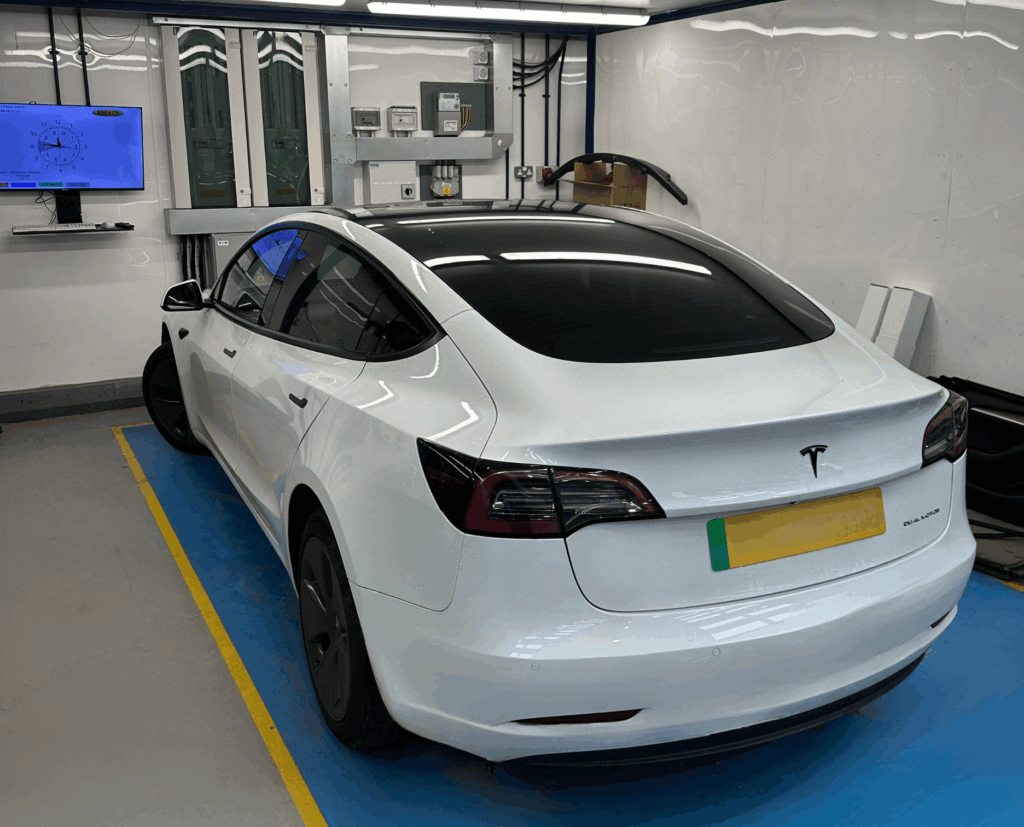
ADAS calibration at our Bracknell, Dorking and Redhill centres
All three Finesse centres carry out ADAS calibration as part of the accident repair process. Where calibration is required, it is included in the repair, not charged separately. We provide a calibration certificate on completion confirming your safety systems are operating within manufacturer specification.
If your vehicle has been in an accident and you are unsure whether your ADAS systems were correctly recalibrated, contact your nearest Finesse centre. We can carry out a diagnostic check and advise on whether recalibration is needed.
Finesse Accident Repair Centres
Approved accident repair centres for Audi, BMW, Cupra, Mini, Seat, Tesla, Volkswagen and Volvo.
Call us: Dorking 01306 743 030 / Bracknell 01344 203058

FAQs
Q: Is ADAS calibration included in my accident repair at Finesse?
A: Yes. At Finesse, ADAS calibration is part of the repair process, not a separate charge. Where your vehicle’s repair affects sensor positioning or camera mounting, recalibration is carried out as standard. You receive a calibration certificate on completion confirming your safety systems have been restored to manufacturer specification.
Q: Does my car need ADAS recalibration after every accident?
A: Not after every accident, but after any repair that affects the area around a sensor or camera. This includes front or rear bumper repairs, windscreen replacement, door mirror work, wheel alignment and suspension repairs. The safest approach is to ask your repairer to carry out a pre-repair diagnostic scan and confirm whether recalibration is required based on the manufacturer’s repair data for your specific vehicle.
Q: What is the difference between static and dynamic ADAS calibration?
A: Static calibration is carried out in a controlled workshop environment with the vehicle stationary, using manufacturer-specified targets and measuring equipment. Dynamic calibration requires the vehicle to be driven at specific speeds under specific road conditions, allowing sensors to self-calibrate using live data. Some vehicles require both types depending on which systems are being recalibrated. Our technicians follow the manufacturer’s specific procedure for your vehicle.
Q: How do I know if my ADAS systems need recalibrating?
A: Dashboard warning lights related to lane departure, emergency braking or parking assist are one signal. Unexpected system behaviour, lane assist pulling when it shouldn’t, parking sensors triggering without an obstacle, adaptive cruise control cutting in erratically, can also indicate miscalibration. However, miscalibrated sensors do not always trigger warning lights. If your vehicle has had any repair involving bumpers, windscreen, mirrors or suspension, a post-repair diagnostic scan is the only way to confirm the systems are operating correctly
Q: Does ADAS recalibration affect my manufacturer warranty?
A: Not having it done can. If ADAS calibration is required following a repair and is not carried out correctly, it may affect your warranty claim in the event of a future incident involving those systems. A completed calibration certificate from a manufacturer-approved repairer confirms the systems were restored to factory specification and protects your warranty position.
Q: Can I get ADAS calibration done if my car was repaired elsewhere?
A: Yes. If your vehicle was repaired at a non-approved bodyshop and you are concerned that ADAS recalibration was not carried out, you can bring it to any of our three centres in Bracknell, Dorking or Redhill for a standalone diagnostic check. We will assess the current state of your safety systems and carry out any required recalibration.